CPS Seminar: Wednesday 15 April 2026, 15:00 - 16:00
Building 53, room 4025
Speaker: Professor Alex Yakovlev, Newcastle University, UK
Title: Data-driven computing, or Liberating computing from memory walls
Abstract: Traditional computing is based on the Von Neumann’s principle of a stored program. This paradigm requires a central processing unit (CPU) to access memory at each step in the algorithm. The memory becomes a bottleneck as it stands on the critical path of the compute actions. Data-driven computing is based on automatic synthesis of the computing configuration “on the fly” (as a process analogous to compilation) from the data collected by human or another computing system and presented in the form of the information about the object to be classified (e.g., recognized) labelled with classification labels, called labelled data mapping (LDM).
This talk will explore potential for designing a data-driven computer based on the concept of an ensemble of learning automata. These learning automata can be trained to perform configuration of computing resources based on LDM. The core of the new machine will be a special type of multicast memory with in-memory computing capability and efficient accessing for reading their states and their state modification. The future of data-driven computing can be projected at many levels of abstraction and with different implementation technologies.
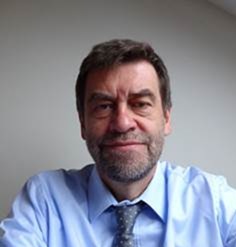
Bio: Alex Yakovlev, PhD (1982), DSc (2006). Since 1991 he is with Newcastle University, UK, where he is a Professor of Computer Systems Design, founded and leads the Microsystems Research Group, and co-founded the Asynchronous Systems Laboratory. He was awarded an EPSRC Dream Fellowship in 2011–2013. He has published 8 edited and co-authored monographs and more than 500 papers in IEEE/ACM journals and conferences, in the areas of concurrent and asynchronous circuits and systems, Petri nets, electronic design automation, low power circuits and systems, AI and machine learning hardware based on Tsetlin automata and electromagnetic computing, with several best paper awards and nominations. He co-invented Signal Transition Graphs (STGs), Signal transition graphs - Wikipedia, and co-led developments of tools for them (Petrify, Workcraft) throughout the last 30 years. He has supervised over 70 PhD students. He is a Fellow of Royal Academy of Engineering and Fellow of IEEE. He is a co-founder of a recently created spin-out company Literal Labs (formerly Mignon Technologies), commercialising solutions for machine learning at the edge of AI.